






If you’ve ever wondered what exactly an EAN13 barcode is and why it’s so important for your products, you’re not alone. Many South African businesses know barcodes are necessary but don’t fully understand how they work or how to get started. This article breaks it down simply and shows how Barcode Direct can help you every step of the way.
What is an EAN13 Barcode?
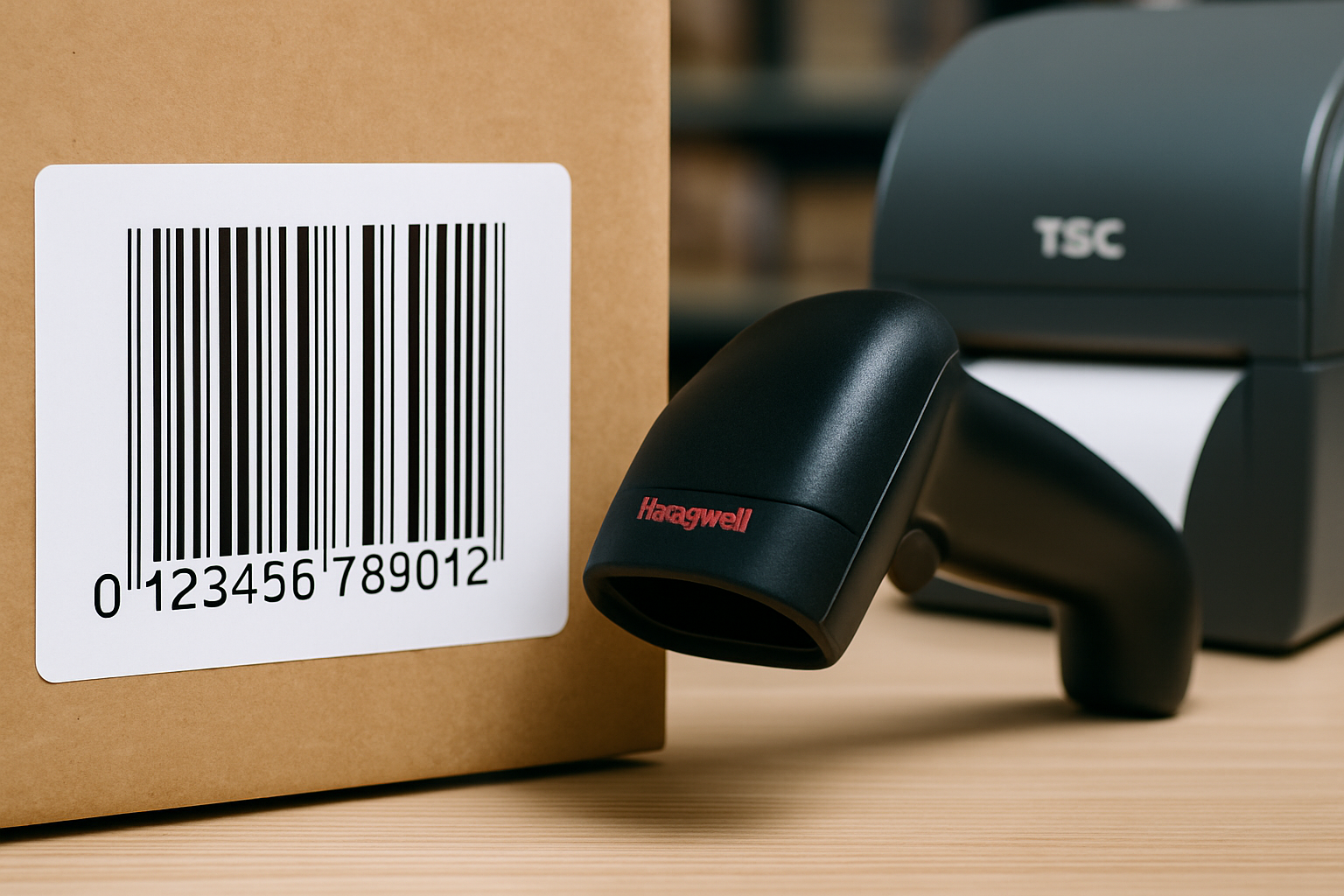
EAN13 stands for European Article Number, and the “13” refers to the 13 digits encoded in the barcode. This barcode type is the global standard for product identification. It looks like a series of black and white vertical lines, but those lines represent numbers that uniquely identify your product.
For example, a 13-digit EAN code might look like this: 6001234567890. The first few digits identify the manufacturer or company, and the rest identify the specific product. When scanned at a checkout or warehouse, this barcode pulls up your product details instantly.
Why Do You Need an EAN13 Barcode?
Using an EAN13 barcode is essential for several reasons:
- Retail readiness: Most retailers in South Africa require products to have EAN13 barcodes for inventory tracking and sales scanning.
- Faster checkout: Barcodes speed up the sales process by letting scanners instantly recognise your product.
- Accurate stock control: Warehouses use barcode scanning to track and manage stock levels efficiently, reducing errors.
- Global recognition: EAN13 is accepted worldwide, so your products can be sold beyond South Africa without a hitch.
How to Register Your Products with GS1 South Africa
To get a legitimate EAN13 barcode, your business must register with GS1 South Africa. GS1 is the global organisation that manages barcode standards and assigns unique company prefixes.
Here’s the basic process:
- Apply for a GS1 company prefix: This is a unique number assigned to your business.
- Assign product numbers: Use your prefix to create unique codes for each product.
- Generate EAN13 barcodes: Convert these numbers into scannable barcode images.
- Print barcodes on your products or labels.
How Barcode Direct Supports Your Barcode Journey
At Barcode Direct, we understand that registering and using barcodes can seem daunting. That’s why we offer comprehensive support to South African businesses:
- GS1 registration assistance: We guide you through the GS1 application, ensuring you get your company prefix quickly.
- Barcode printing solutions: Whether you want labels or direct printing, we supply top-quality printers from trusted brands like Honeywell and TSC.
- Scanner recommendations: We provide reliable barcode scanners that integrate seamlessly with your stock control systems.
- Consultation on implementation: From retail shelves to warehouse management, we help you use your barcodes efficiently.
What to Do After You Have Your EAN13 Barcode
Once you have your EAN13 barcode:
- Print and apply it: Use barcode labels printed on Honeywell or TSC printers for durability and clarity.
- Integrate with your stock system: Barcode scanners can update your inventory in real time, reducing manual errors.
- Train your team: Ensure staff know how to scan and manage barcoded products efficiently.
- Maintain your database: Keep product information accurate and up to date for smooth retail and supply chain operations.
For example, a South African food producer using a TSC desktop label printer can quickly print barcode labels for each new batch, ensuring every unit is ready for retail scanning. Meanwhile, a warehouse using Honeywell scanners can speed up stocktaking and dispatch processes.
Conclusion
An EAN13 barcode is more than just lines on a label — it’s a critical tool for product identification, stock control, and retail success. Registering with GS1 South Africa and working with Barcode Direct ensures your business gets the right barcodes and equipment tailored to your needs. Ready to streamline your operations with reliable Honeywell or TSC barcode solutions? Contact Barcode Direct today to get started.