






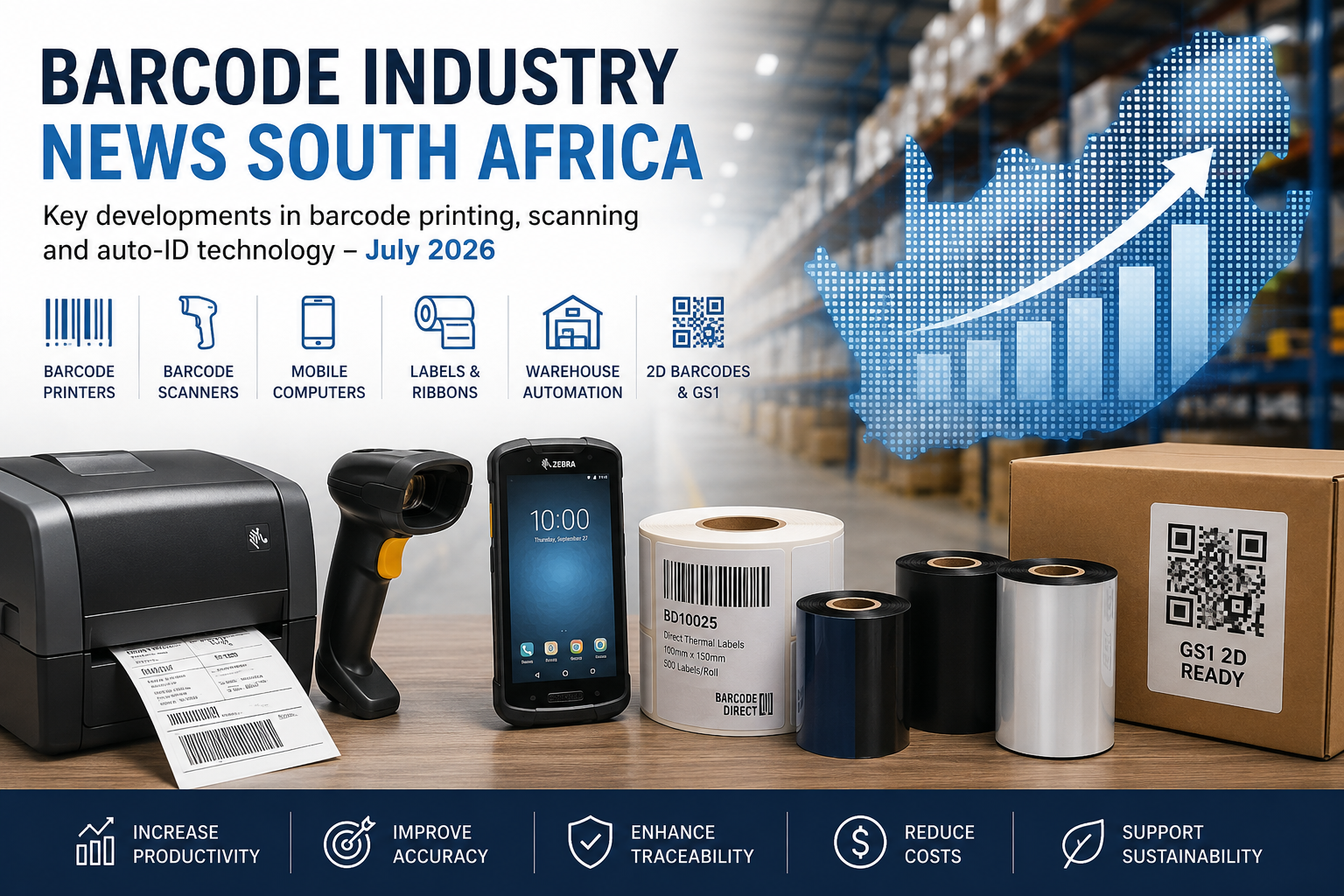
Technology in the barcode and automatic identification (Auto-ID) industry continues to evolve rapidly. New hardware, software and consumables are changing the way warehouses operate, retailers manage inventory and manufacturers improve traceability.
For South African businesses, these developments are more than just industry news—they influence purchasing decisions, system upgrades and long-term operational efficiency.
At Barcode Direct, we monitor global developments so our customers can make informed technology investments. Here are the most significant updates from the past few weeks and what they could mean for your business.
1. Honeywell's Productivity Solutions Business Is Changing Hands
One of the biggest announcements this year is Honeywell's agreement to sell its Productivity Solutions and Services division to Brady Corporation.
This business includes many of Honeywell's best-known barcode scanners, mobile computers, industrial printers and warehouse mobility solutions.
Why this matters
Whenever a major acquisition takes place, customers naturally wonder whether product availability, warranties or support will change.
At this stage, existing Honeywell customers should not expect any immediate disruption. However, acquisitions of this scale often lead to investment in new product development, software integration and expanded service offerings over time.
Businesses planning new deployments should continue evaluating Honeywell products alongside competing platforms rather than delaying projects unnecessarily.
Relevant products
- Honeywell barcode scanners
- Honeywell mobile computers
- Honeywell industrial printers
- Honeywell warehouse mobility solutions
2. Zebra Continues Investing in Warehouse Automation
Zebra Technologies continues to expand its warehouse automation portfolio with new mobile computers, wearable devices and AI-powered machine vision solutions.
Modern warehouses increasingly require technology that can support:
- Faster picking
- Real-time inventory updates
- Reduced scanning errors
- Better worker productivity
- Automated quality control
These solutions are particularly relevant as labour shortages and increasing customer expectations continue to place pressure on distribution centres.
Why this matters for South African businesses
Warehouse operators are under increasing pressure to improve productivity without significantly increasing headcount.
Mobile computing and wearable scanning technology can often deliver measurable productivity improvements while reducing operational errors.
Businesses considering warehouse modernisation should ensure that any investment aligns with their ERP or warehouse management system.
3. GS1 Sunrise 2027 Is Approaching
The global transition towards 2D barcodes continues to gain momentum.
The GS1 Sunrise 2027 initiative encourages retailers and manufacturers worldwide to prepare for the widespread adoption of QR codes and other advanced barcode formats that contain significantly more information than traditional linear barcodes.
Unlike traditional barcodes, modern 2D symbols can include:
- Product information
- Batch numbers
- Expiry dates
- Manufacturing details
- Web links
- Authentication information
Why this matters
Many organisations already have compatible scanners without realising it.
Others may still rely on older laser scanners that cannot decode modern 2D symbols.
Now is an excellent time to review scanning infrastructure before upgrades become urgent.
4. Demand for Intelligent Scanning Continues to Grow
Manufacturers are increasingly incorporating artificial intelligence into scanning hardware.
Modern barcode scanners are becoming better at reading:
- Damaged labels
- Poor-quality printing
- Direct part marks
- Curved surfaces
- Reflective packaging
The result is improved first-pass read rates and fewer production delays.
For industries such as automotive manufacturing, pharmaceuticals and logistics, these improvements translate directly into increased productivity.
5. Colour Label Printing Is Becoming More Accessible
On-demand colour label printing continues to become more affordable for smaller businesses.
Instead of ordering large quantities of pre-printed labels, companies can now produce professional colour labels internally whenever required.
Typical applications include:
- Food products
- Cosmetics
- Chemical containers
- Visitor badges
- Promotional labels
- Short production runs
For businesses with frequent label changes, in-house colour printing can significantly reduce lead times and waste.
6. Thermal Transfer Ribbon Technology Continues to Improve
Thermal transfer ribbons remain a critical component of industrial label printing.
Recent developments focus on:
- Longer ribbon lengths
- Improved print durability
- Reduced downtime
- More environmentally responsible manufacturing
Longer ribbons require fewer roll changes, improving productivity in high-volume environments.
Businesses printing thousands of labels every day can realise meaningful operational savings through reduced interruptions.
Choosing the correct ribbon remains equally important.
Generally:
- Wax ribbons are ideal for paper labels.
- Wax/resin ribbons offer increased durability.
- Resin ribbons provide maximum resistance to chemicals, heat and abrasion.
Selecting the correct ribbon for the application extends print life and reduces replacement costs.
7. South Africa's Auto-ID Market Continues to Benefit from E-commerce Growth
Growth in South African e-commerce continues to increase demand for:
- Shipping labels
- Barcode printers
- Mobile computers
- Warehouse scanners
- Inventory management solutions
As fulfilment expectations rise, businesses are investing in technology that improves accuracy and enables faster order processing.
Companies implementing warehouse automation today are positioning themselves to meet future customer expectations while reducing operational costs.
What South African Businesses Should Do Next
Rather than waiting until existing equipment fails, organisations should begin assessing their current Auto-ID infrastructure.
Questions worth asking include:
- Can our scanners read modern 2D barcodes?
- Are our printers suitable for future label requirements?
- Are we using the correct thermal transfer ribbons?
- Could mobile computers improve warehouse productivity?
- Is our current labelling system scalable?
Addressing these questions proactively can help avoid rushed purchasing decisions later.
How Barcode Direct Can Help
At Barcode Direct, we work with businesses across South Africa to design barcode and labelling solutions that improve operational efficiency.
Our solutions include:
- Industrial and desktop barcode printers
- Barcode scanners
- Mobile computers
- Thermal transfer ribbons
- Self-adhesive labels
- Asset identification systems
- Warehouse mobility solutions
- Label design software
- Technical support and implementation assistance
Whether you are replacing existing equipment or planning a new warehouse project, selecting the right combination of hardware and consumables is critical to achieving long-term value.
Looking Ahead
The barcode industry is evolving beyond simple label printing.
Automation, mobility, artificial intelligence and richer barcode data are reshaping supply chains worldwide.
For South African businesses, the opportunity is clear: organisations that modernise their barcode infrastructure today will be better positioned to improve productivity, reduce errors and support future growth.
We'll continue monitoring global developments and sharing practical insights into how they affect local businesses.
If you'd like advice on selecting the right barcode printers, scanners, mobile computers or labelling solutions for your organisation, the team at Barcode Direct is here to help.
Frequently Asked Questions
What is the biggest trend in the barcode industry?
The move toward 2D barcodes, smarter scanning technology and increased warehouse automation.
Should businesses replace older barcode scanners?
If your scanners cannot reliably read modern 2D codes or no longer meet productivity requirements, it is worth evaluating newer models.
What are thermal transfer ribbons used for?
They transfer ink onto labels using heat, producing durable, long-lasting printed labels suitable for industrial environments.
What industries benefit most from barcode technology?
Warehousing, logistics, manufacturing, retail, healthcare, food production and asset management all rely heavily on barcode systems.
How can Barcode Direct assist?
Barcode Direct supplies barcode printers, scanners, mobile computers, labels, thermal transfer ribbons and related software throughout South Africa, helping businesses implement solutions tailored to their operational needs.